Service
Gutters sized for the roof plane they are actually catching
Undersized five inch gutter on a large roof plane is the most common defect on older housing in this region. It does not leak, it overflows, and it does it only in heavy rain, which is why it goes unnoticed for years while the water goes into the foundation.
Sizing, which is the part that gets ignored
Gutter capacity is a function of the trough size, the downspout count, and the roof area draining into it. A five inch K-style gutter handles a moderate plane on a shallow pitch. Put it under a 900 square foot plane at 9:12 and it overflows in a downpour no matter how clean it is, because the water arrives faster than the trough can carry it to a downspout.
Six inch gutter with a 3 by 4 downspout carries roughly 40 percent more than five inch with a 2 by 3, and the cost difference is small. On any plane over about 700 square feet, or any steep roof, it is the right call. This single decision fixes more chronic wet-basement problems than any other gutter work.
Downspout placement and discharge matter as much as the trough. A downspout emptying two feet from the foundation is putting the entire roof's water against the wall. Extensions, a splash block run well away from the house, or a tie-in to a drain are cheap and they are what the gutter is actually for.
Seamless gutters, and what they do and do not solve
Seamless gutter is roll-formed on site from a coil, so a 40 foot run is one continuous piece with no joints along its length. Joints are where sectional gutter leaks, so removing them removes the most common failure. It is the regional default and it is worth the small premium.
What it does not remove is the corners. Every inside and outside corner is a mitre, and mitres are still joints. On a Victorian or a shingle-style house with a complex roofline, the corner count drives both the price and the reliability, and the workmanship at those corners is what separates a good install from a callback.
Hanger spacing is the other quality marker. Standard is 36 inches. On an exposed coastal elevation or under a roof that carries heavy snow load, tighter spacing keeps the gutter from working loose over a few seasons.
Guards, honestly
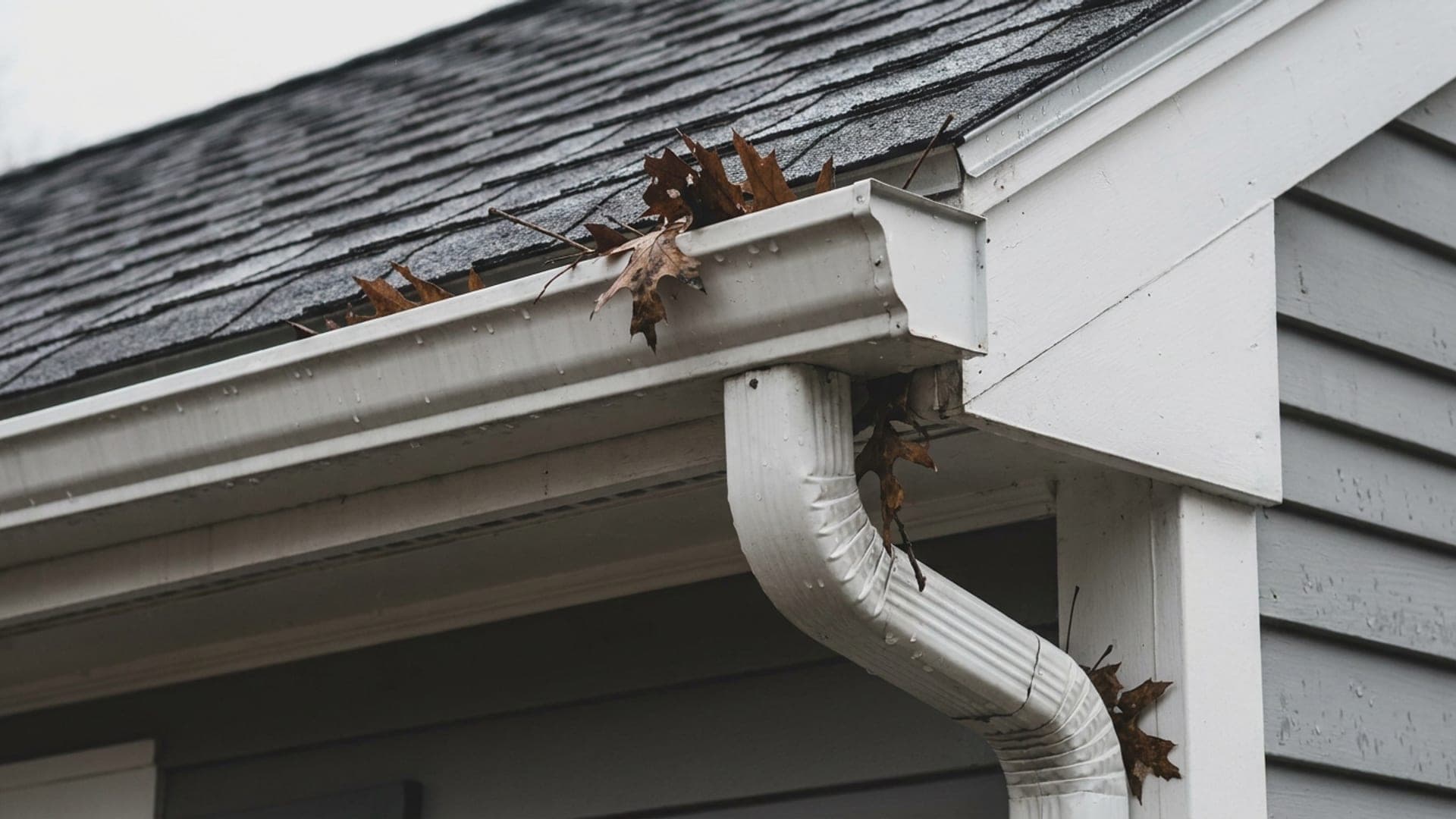
Gutter guards work well under pine needles and moderate leaf load. Under heavy oak and maple leaf fall, which is most of this region, the better designs reduce cleaning frequency rather than eliminating it. Anyone promising you never clean them again is overselling.
Guards do not prevent ice dams. This is worth stating plainly because it is the most common false claim in this category. An ice dam forms on the roof surface above the gutter and would form there if the gutter were removed entirely. The cause is heat escaping into the attic and the fix is air sealing, insulation, and balanced ventilation. A guard salesman who tells you otherwise is selling the wrong product for your problem.
Guards also add weight and can make cleaning harder when they do clog, since the guard has to come off first. On a three story house where cleaning means a tall ladder, that trade is usually still worth it. On a single story ranch you can reach easily, often it is not.
What drives the price
Linear footage first, then trough size, then material, then the number of corners and downspouts, then height and access. A three-decker with short runs at three different heights costs more per foot than a ranch with one long run you can reach from a six foot ladder.
Aluminium is the default. Copper costs several times as much and lasts several times as long, and on a house that already has copper flashing it is the correct choice, because mixing copper and aluminium in the same water path causes galvanic corrosion at the junction.
How long it takes
A typical single family with 150 to 200 linear feet is one day. A larger or more complex roofline runs one to two. Guards on an existing system are usually a same-day job. Nothing here is a multi-week project, and any quote suggesting otherwise deserves a question.
What drives the gutters price
Heaviest factor first. When two quotes differ by thousands, the difference is almost always in one of these six lines rather than spread evenly across the job.
| # | Factor | Typical effect | Why |
|---|---|---|---|
| 01 | Linear footage | Largest single factor | A typical house runs 150 to 200 feet. A farmhouse with an ell commonly runs 200 to 280. |
| 02 | Trough size | Roughly 40 percent more capacity for six inch | Six inch with a 3 by 4 downspout against five inch with a 2 by 3. Undersized gutter on a large plane is the most common defect on older housing here. |
| 03 | Corner count | Drives both price and reliability | Every inside and outside corner is a mitre, and mitres are the joints that leak. |
| 04 | Material | Aluminium through copper | Copper costs several times aluminium and lasts several times as long. Never mix the two in one water path. |
| 05 | Height and access | Real labour cost | Short runs at three different heights cost more per foot than one long reachable run. |
| 06 | Guards | 8 to 20 dollars per linear foot | Reduce cleaning frequency under heavy leaf load rather than eliminating it. |
Common questions
Six inch on any roof plane over about 700 square feet, and on any steep roof regardless of area. Six inch with a 3 by 4 downspout carries roughly 40 percent more water than five inch with a 2 by 3, and the price difference is small. Undersized gutter on a large plane is the most common defect on older housing here.
No. The dam forms on the roof surface at the cold eave, above the gutter, and would form there with no gutter at all. Ice dams are caused by heat escaping into the attic and are fixed by air sealing, insulation, and balanced soffit-to-ridge ventilation. Any product sold as an ice dam solution on the basis of the gutter is being sold for the wrong problem.
Roughly 1,500 to 5,200 dollars for a typical house with about 180 linear feet of seamless aluminium gutter and downspouts, before regional adjustment. Copper runs several times that. Guards add roughly 8 to 20 dollars a linear foot depending on the type.
They reduce how often you clean rather than eliminating it. Under heavy deciduous leaf fall, expect to still service them, and note that a clogged guard is harder to clear than an open gutter because the guard has to come off. On a three story house where cleaning means a tall ladder, the trade is usually worth it. On a reachable single story, often not.
Twice a year under significant tree cover, once in late autumn after the leaves are down and once in spring. Under heavy oak, three times is realistic. A gutter that overflows only in heavy rain and is otherwise clear is usually undersized rather than clogged.
Yes. Aluminium is formed on site and installation does not depend on temperature the way sealant-heavy work does. The practical constraint is ice on the roof edge and safe ladder footing, not the material.
Gutters across all three states
Gutters is covered in Rhode Island, Massachusetts, and Connecticut. Pick a state for the local overview, or open a town to see the housing stock, the permitting authority, and a cost range for that market.
Gutters in Rhode Island
39 municipalities
Gutters in Massachusetts
351 cities and towns
Gutters in Connecticut
169 municipalities