Service
Siding, and an honest account of what each material actually costs
What is behind the siding usually matters more than what goes over it. On most pre-1940 housing in this region the wall cavity is empty, there is no housewrap, and the sheathing is board. A re-side is the one moment in the life of the house when fixing all three is cheap.
The job under the job
Stripping the old cladding exposes the sheathing, the cavity, and every place water has been getting in. That is the opportunity. Blowing dense-pack insulation into an empty cavity while the wall is open costs a fraction of doing it as a standalone job later, and on a pre-1940 house it is usually the single largest comfort improvement available. Housewrap and proper flashing at windows and doors go on at the same time.
The rot is predictable and worth pricing before it is found. It concentrates at the bottom course where the wall meets the foundation, at the corner boards, and under any window with a failed sill. That work is carpentry, not siding, and it belongs in the quote as an allowance with a unit rate.
Materials, with the trade-offs stated honestly
Vinyl runs 4.50 to 8.00 dollars a square foot installed, lasts 25 to 40 years, and needs nothing done to it. It fades in full southern exposure and it cannot be repainted to fix that. It is rarely approved in a historic district. On a postwar ranch or cape it is a perfectly defensible answer and roughly half the installed cost of fiber cement.
Fiber cement at 9.50 to 16.00 lasts 40 to 60 years and holds paint 12 to 15 years even in coastal exposure, which is where vinyl fades fastest. It is heavy, it needs careful cutting, and the installation quality matters more than with vinyl. If you are staying in the house twenty years, the lifetime cost frequently comes out lower than vinyl despite costing twice as much up front.
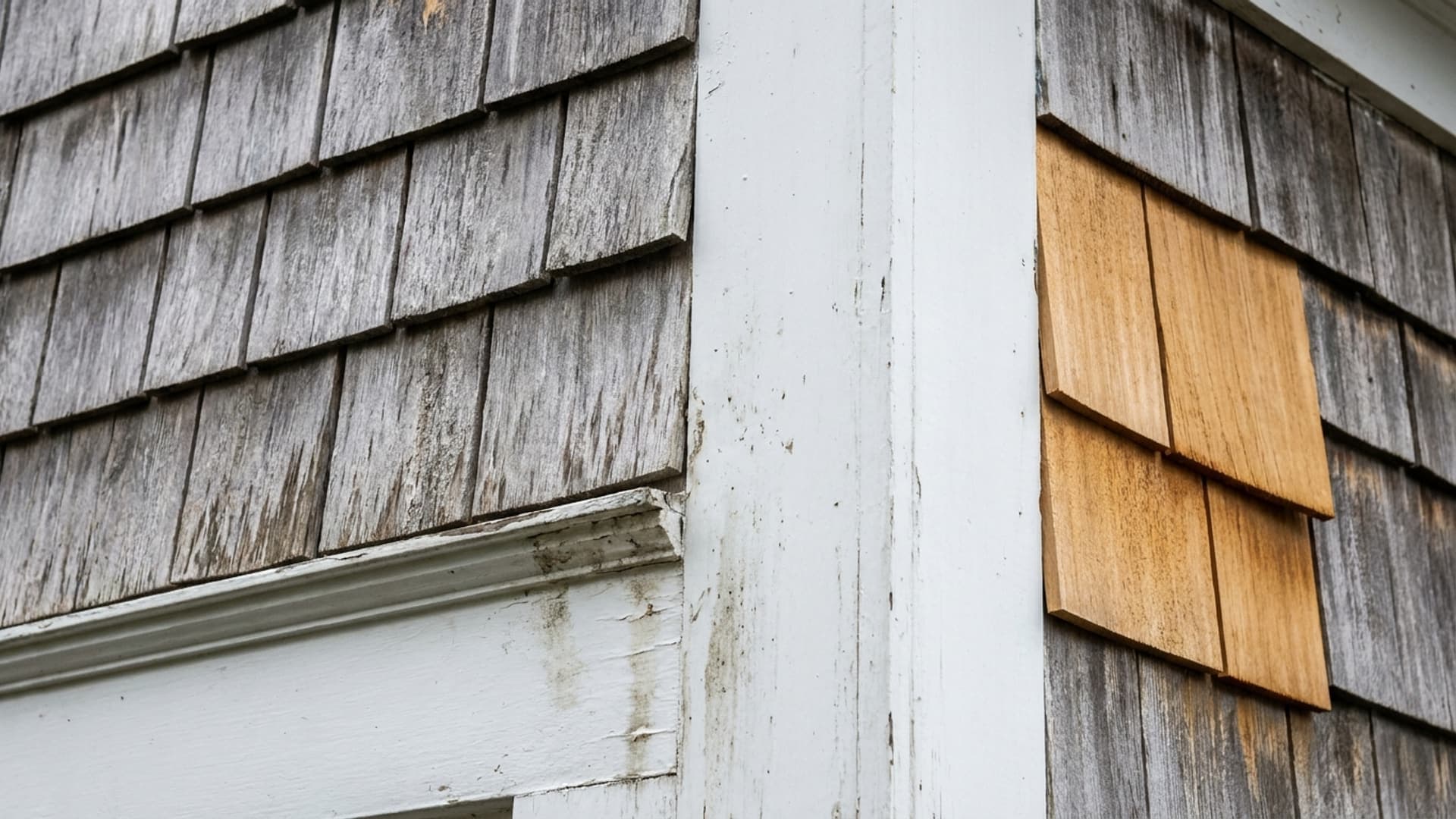
Cedar shingle at 11.00 to 19.00 is the regional answer on the coast for good reason. It moves with humidity, weathers to grey rather than failing, and handles salt air better than almost anything. It either gets stained every 5 to 8 years or is left alone to weather, and both are legitimate choices. Cedar clapboard at 10.00 to 17.00 needs repainting every 5 to 8 years, which is a real recurring cost to put in the model.
Engineered wood at 7.50 to 12.50 sits between vinyl and fiber cement, lasts 25 to 35 years, and needs repainting every 8 to 12. It handles coastal exposure less well than either cedar or fiber cement.
Because this is a referral service rather than a contractor with a product line to defend, here is the neutral version: vinyl wins on upfront cost, fiber cement usually wins on lifetime cost if you are staying, cedar wins on coastal durability and appearance, and in a historic district the decision is frequently made for you.
What your housing stock changes
A three-decker carries 2,800 to 4,000 square feet of wall across three stories with narrow side yards, which makes staging a genuine cost driver rather than a detail. A cape carries 1,200 to 1,800 square feet with simple geometry and is the least expensive re-side in this housing stock. A farmhouse with a main block and an ell frequently totals 2,200 to 3,200 and meets a stone foundation on an irregular line that needs a proper water table detail.
On a Victorian, the trim is the house. Brackets, frieze boards, window heads, and shingle courses in the gable are what make it read correctly, and covering them is what makes a re-sided Victorian look wrong. Price it as siding plus trim restoration and expect the trim to be a large share of the labour.
On a colonial, match the existing exposure. A four inch clapboard exposure replaced with a seven inch panel reads wrong from the street even when the material is good.
What drives the price
Wall area first, then material, then the condition of what is underneath, then access. A three-story building with eight feet to the neighbour costs more per square foot to stage than a ranch with open yard on all sides. Trim detail and the number of corners, windows, and doors to work around all add labour that square footage alone does not capture.
Coastal exposure adds roughly 6 percent for upgraded fasteners and materials. Within a mile of open water, stainless fasteners are the specification, not an upgrade.
How long it takes
A cape or a ranch is four to seven working days. A colonial or a farmhouse runs seven to twelve. A three-decker is two to four weeks depending on staging and trim. Add insulation work and allow another one to three days, which is time well spent while the wall is open.
Weather matters more here than on a roof, because the wall is exposed for longer and housewrap left open to driving rain is not doing its job. Most contractors sequence a re-side elevation by elevation for exactly that reason.
Siding materials compared
Installed cost, how long it lasts, what it needs doing to it, and how it behaves within a mile of open water. No single material wins on every axis, and anyone telling you one does is selling it.
| Material | Per sq ft | Life | Maintenance | Coastal | Historic |
|---|---|---|---|---|---|
| Vinyl | $4.5 to $8 | 25 to 40 yr | None, fades in full sun | Good | Rarely approved |
| Insulated vinyl | $7 to $11 | 25 to 40 yr | None | Good | Rarely approved |
| Fiber cement | $9.5 to $16 | 40 to 60 yr | Repaint every 12 to 15 years | Excellent | Sometimes |
| Engineered wood | $7.5 to $12.5 | 25 to 35 yr | Repaint every 8 to 12 years | Fair | Sometimes |
| Cedar shingle | $11 to $19 | 30 to 50 yr | Stain every 5 to 8 years, or let it weather | Excellent | Usually required |
| Cedar clapboard | $10 to $17 | 30 to 50 yr | Repaint every 5 to 8 years | Good | Usually required |
Massachusetts baseline before regional adjustment. Estimates for this market, not quotes. Compare these over the years you plan to stay, which is where the cheaper option stops being the cheaper option.
What drives the siding price
Heaviest factor first. When two quotes differ by thousands, the difference is almost always in one of these six lines rather than spread evenly across the job.
| # | Factor | Typical effect | Why |
|---|---|---|---|
| 01 | Wall area | Largest single factor | A cape runs 1,200 to 1,800 square feet. A three-decker runs 2,800 to 4,000 across three stories. |
| 02 | Material | 4.50 to 19.00 per square foot | Vinyl through cedar shingle. Roughly a four-fold spread on the same wall. |
| 03 | What is behind it | Allowance item | Rot concentrates at the sill course, the corner boards, and under failed window sills. That is carpentry. |
| 04 | Insulation while open | 10 to 16 percent of heating load | A fraction of what the same work costs later through drilled holes. The best value decision available during a re-side. |
| 05 | Trim detail | Can be a third of the labour | On a Victorian the brackets and frieze boards are the house. Covering them is what makes a re-side look wrong. |
| 06 | Access and staging | Real labour cost | Three stories with eight feet to the neighbour is slower than an open suburban lot. |
Common questions
Vinyl costs roughly half as much installed, lasts 25 to 40 years, and needs no repainting at all. Fiber cement lasts 40 to 60 years and holds paint 12 to 15 years even in coastal exposure where vinyl fades. If you are in the house under ten years, vinyl usually wins on the numbers. If you are staying, or you are within a mile of open water, fiber cement usually does.
On a pre-1940 house with an empty cavity, almost always. Dense-pack cellulose or blown fiberglass into an open wall is a fraction of what the same work costs later through drilled holes, and it cuts heating load by roughly 10 to 16 percent. It is the best value decision available during a re-side.
Physically yes, and some contractors will quote it that way because it is faster. It also means nobody looks at the sheathing, nobody finds the rot, the cavity stays empty, and the wall gets thicker than the window and door trim was built for. On anything older than about 1960 it is usually the wrong call.
For a typical 1,800 square feet of wall, vinyl lands around 8,000 to 14,000 dollars and fiber cement around 17,000 to 29,000 before regional adjustment. Cedar runs higher again. A three-decker with 3,500 square feet of wall is a substantially larger project than either figure suggests.
Rarely on a visible facade. Most commissions in this region require clapboard or shingle in the original exposure, painted or stained. Fiber cement is sometimes approved, cedar usually is. Check with the local commission before you price the job, because the decision is frequently made for you.
It attacks fasteners first, then finishes. Within a mile of open water, stainless fasteners are the specification regardless of cladding. Fiber cement and cedar both hold up well. Engineered wood does less well, and any steel component will show corrosion within a few seasons.
Siding across all three states
Siding is covered in Rhode Island, Massachusetts, and Connecticut. Pick a state for the local overview, or open a town to see the housing stock, the permitting authority, and a cost range for that market.
Siding in Rhode Island
39 municipalities
Siding in Massachusetts
351 cities and towns
Siding in Connecticut
169 municipalities