October 1, 2026
Vinyl vs Fiber Cement Siding in New England: The Honest Cost Comparison
Vinyl costs roughly half as much installed and never needs paint. Fiber cement lasts longer and handles salt air better. Which one wins depends on the house.
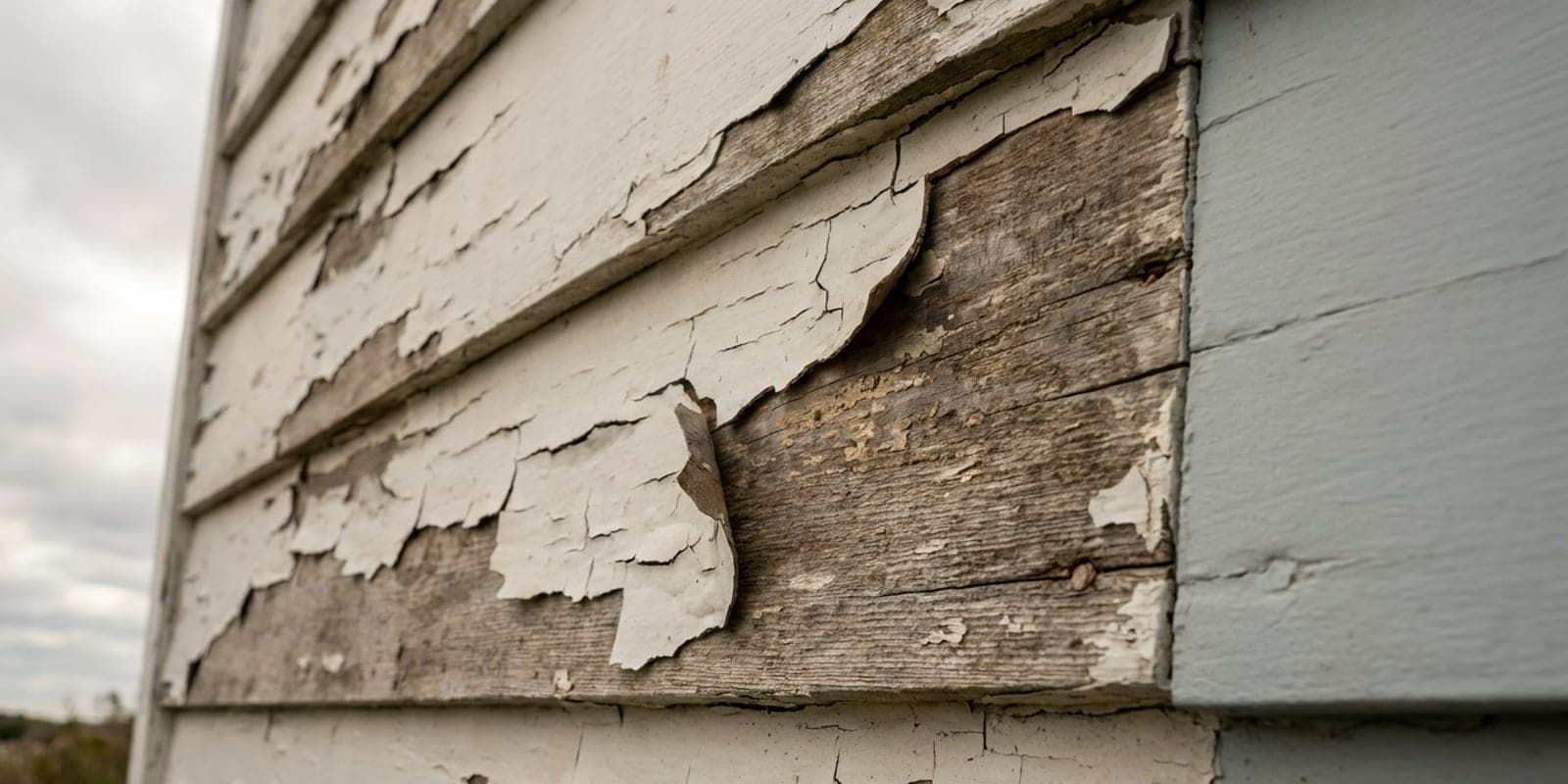
Vinyl costs roughly half as much installed as fiber cement and never needs repainting. Fiber cement lasts longer, holds paint for 12 to 15 years in coastal exposure where vinyl fades, and gets approved more often in historic districts. Neither one is the right answer for every house. This is how to decide.
This site does not sell either product. It refers homeowners to contractors, so there is nothing to defend here, and the comparison below says so plainly where vinyl is the better choice.
The installed cost, per square foot
Costs are estimates for this market, not quotes.
Vinyl runs 4.50 to 8.00 dollars per square foot installed, and lasts 25 to 40 years. Insulated vinyl, which has a foam backing, runs 7.00 to 11.00 dollars and lasts about the same. Fiber cement runs 9.50 to 16.00 dollars and lasts 40 to 60 years.
On a house with 1,800 square feet of wall, which is a typical two-story colonial, that works out to roughly 8,100 to 14,400 dollars for vinyl and 17,100 to 28,800 dollars for fiber cement. Whole-house siding projects in this market, including both materials and everything between them, run roughly 14,000 to 38,000 dollars.
What the upkeep looks like
Vinyl needs nothing. You wash it. In full sun it fades over the years, particularly in dark colors, and it can crack in a hard impact in very cold weather. If a panel cracks it can be replaced, provided the color is still available and the old panels have not faded.
Fiber cement needs repainting. In a coastal exposure it holds paint for roughly 12 to 15 years. That sounds like a long time until you add the cost of repainting a whole house, and then it is an ongoing expense that vinyl does not have.
So the real comparison is not 17,000 versus 8,000 dollars. It is the up-front difference plus a repaint every dozen years or so, against a material that you install once and leave. Over a long ownership, vinyl can still come out cheaper. It does not always.
Where fiber cement is the better choice
Coastal exposure. Salt-laden air, wind-driven rain, and repeated wetting are hard on every siding material. Fiber cement is rated excellent for coastal conditions, since it does not rot, does not warp, and does not rust. Vinyl is rated good: it will not corrode, but it can be loosened by wind. Along the Rhode Island and Massachusetts shore, and on the Connecticut shoreline, that difference counts. See how salt air damages siding and fasteners for the mechanism.
Historic districts. Local historic district commissions in all three states review exterior changes on contributing structures. Vinyl is rarely approved. Fiber cement is sometimes approved, usually with a smooth profile and a specific reveal that matches the original clapboard. Cedar clapboard is usually approved, and is the safest choice if the house is inside a district. Check with the commission before ordering anything, since review runs separately from the building permit and takes weeks.
Houses where the look matters. A thick, crisp lap profile reads as paint on wood in a way that vinyl does not. On a Victorian with decorative shingles, or a Georgian with narrow clapboard, that matters. On a postwar ranch it often does not.
Fire exposure. Fiber cement does not burn. On a triple-decker in Worcester or Providence, where the next house is six or eight feet away, that is worth some thought.
Where vinyl is the better choice
Budget. If the choice is vinyl now or nothing for another ten years, vinyl wins. Rotting wood underneath a failing paint job costs far more than a siding project.
Postwar housing. Capes and ranches from the 1940s through the 1960s, the bulk of the stock in Kent County, Rhode Island, and in the Naugatuck Valley in Connecticut, are not historic districts and have simple wall geometry. Vinyl suits them, and the savings are real.
Insulated vinyl as an energy measure. A foam-backed panel adds a little continuous insulation to the outside of the wall. It is not a substitute for insulating the wall cavity, and the energy benefit is modest, but on a house where the walls have no insulation at all, it helps.
People who do not want to paint. If the thought of repainting the house every dozen years is unwelcome, say so. There is nothing wrong with choosing the material that fits how you want to live.
Two other materials worth pricing
Fiber cement and vinyl are not the only choices. Cedar shingle runs about 11.00 to 19.00 dollars per square foot installed, lasts 30 to 50 years, and is rated excellent in coastal exposure. Cedar clapboard runs about 10.00 to 17.00 dollars, and needs repainting every five to eight years. Engineered wood runs about 7.50 to 12.50 dollars, sits between vinyl and fiber cement on price, and needs repainting every 8 to 12 years, but it is rated only fair near salt water. If you are choosing between vinyl and fiber cement and neither feels right, cedar is the traditional answer on this housing stock, and it is the one most likely to be approved in a historic district.
What matters more than the material
The siding material is a smaller decision than people think. Three other things decide whether the job lasts.
What is under the old siding. Many New England houses built before 1940 have board sheathing, not plywood. Boards shrink and move, and nails hold differently. Layers of old siding are not unusual in older mill housing, and some houses of that age carry asbestos cement shingles that should be tested before anyone disturbs them. Ask any contractor what they expect to find and what they will do about it.
The weather barrier and flashing. Siding is not waterproof. Water gets behind it, and the house wrap and the window flashing are what manage that. If the contractor is going to put new siding over old clapboard without opening anything up, they are hiding the problem, not solving it. A good bid includes new flashing at every window and door.
Lead paint. Houses built before 1978 may have lead paint on the original siding, trim, and windows. Federal rules require lead-safe work practices when disturbing painted surfaces on those houses. Ask any contractor you speak to how they handle it.
A rough decision guide
If the house is in a historic district, the choice is probably made for you. Talk to the commission and consider cedar or an approved fiber cement profile.
If the house is within a mile of the water, choose fiber cement or cedar, and budget for repainting. A direct oceanfront exposure adds roughly 12 percent to the installed cost for the work itself, and within a mile adds about 6 percent.
If the house is a postwar Cape or ranch, inland, on a budget, vinyl is a perfectly sound answer.
If the house is a triple-decker, the wall area is large and the cost difference between the materials is large too. Get both priced, and ask about the fire separation and the upkeep over the next 20 years.
You can compare the numbers on your own house using the material comparison tool, which accounts for exposure and lifespan.
Next step
The siding guide covers every material and the sub-service pages go into detail on each. If you are ready for prices, the free estimate form connects you with contractors who work in your town. Quotes are free and carry no obligation.