October 1, 2026
How Salt Air Damages Siding and Fasteners on Coastal New England Homes
Salt air attacks the nail before it attacks the shingle. Electro-galvanized fasteners corrode in coastal exposure, and the failure usually comes in a nor'easter.
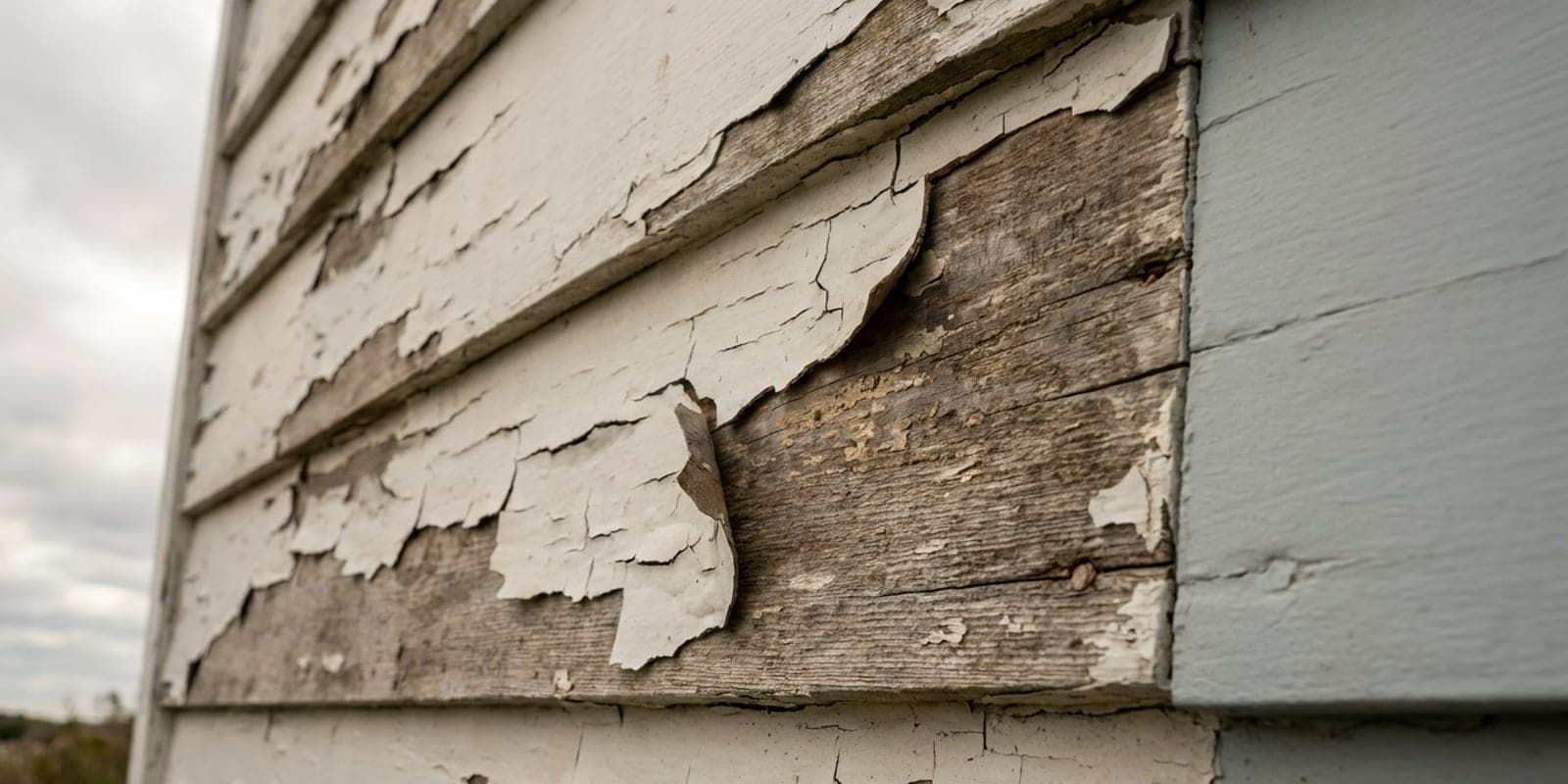
Salt air attacks the nail before it attacks anything you can see. On a coastal house, the shingle or the siding looks fine for years while the fasteners behind it corrode, and the failure usually comes all at once, in a nor'easter, when the wind finally pulls the nail head through a piece of material that stopped being held.
That is the mechanism. The rest of this is about where it matters, what to specify, and what the extra cost actually is.
What salt does
Sea spray and wind-driven fog carry chloride in tiny droplets. They settle on every exterior surface within a mile or two of the water, and farther on a windy shoreline. Chloride accelerates corrosion in most common metals by breaking down the protective film that normally forms on the surface.
On a house, the metals that matter are the nails, screws, and staples that hold things on, the flashing, the gutters and hangers, and the hardware on doors and windows. Wood and cement products are affected too, but more slowly, and mostly through repeated wetting and drying.
Two things make this worse in New England specifically. The first is the freeze-thaw cycle. Moisture that gets into a corroded nail hole freezes and expands, widening the gap. The second is that coastal houses here often have shingle siding laid in many small pieces, each one held by a couple of fasteners, so there are thousands of nails on a wall and all of them are exposed.
Fasteners, ranked
Three grades of fastener show up in a coastal job.
Electro-galvanized. A thin zinc coating applied by electroplating. It is the cheapest and the most common. In a salt environment it can fail within a few years, since the coating is thin, and nothing about it announces the failure until the nail is gone. A rust streak below a nail head is the first sign.
Hot-dipped galvanized. The nail is dipped in molten zinc, which gives a much thicker coating. It holds up far better in coastal conditions, and it is the usual specification for exposed work along the shore. It is a sound choice for most exposed work.
Stainless steel. The best performance. It does not rust in salt air. It costs more per fastener, but fasteners are a small share of a siding or roofing job, so the difference across a whole project is modest. Stainless is the specification on direct oceanfront houses and anywhere cedar will be left to weather, since the tannins in cedar can streak around coated nails.
On the roof, the same logic applies. Architectural asphalt shingles are fastened with roofing nails, and in coastal exposure along the entire South County shoreline in Rhode Island, Newport County, the Massachusetts South Shore and the Cape, and the Connecticut shoreline, stainless or hot-dipped galvanized nails are the specification rather than an upgrade.
Ask any contractor which fastener they are quoting. If the answer is vague, assume electro-galvanized.
Dissimilar metals
Salt water is a good conductor, and when two different metals touch in it, one corrodes faster. Aluminum flashing against copper, or against untreated steel, is the usual problem. Gutters, flashing, and hangers on a shoreline house should be a consistent material, or isolated from each other. This is a small detail that can add years to a gutter system.
How each siding material copes
The cost data behind this site rates each material for coastal use.
Fiber cement: excellent. It does not rot, warp, or rust. Paint is what takes the beating, and in coastal exposure it holds roughly 12 to 15 years.
Cedar shingle: excellent, with the right fasteners. This is the traditional material for the coast, and it has been used for centuries on the Cape and the islands for exactly that reason. It weathers to silver grey, needs no paint, and tolerates salt. The wood is fine. It is the nails that fail.
Cedar clapboard: good. It needs repainting every five to eight years in exposure.
Vinyl: good. It will not rust or rot, but wind can work panels loose, and the nail slots can wear.
Engineered wood: fair. The composite substrate is vulnerable if the edges are not sealed, and the repaint cycle is roughly 8 to 12 years.
You can compare these side by side in the material comparison tool, and the vinyl versus fiber cement guide goes through the trade-offs in more detail.
What it adds to the cost
Costs are estimates for this market, not quotes.
The calculator on this site treats a house within a mile of the water as roughly 6 percent more expensive than an inland equivalent, and a direct oceanfront house as roughly 12 percent more. That is mostly the cost of better fasteners, more careful flashing, and more frequent maintenance allowances.
It is a modest premium. On a whole-house siding job priced at 25,000 dollars inland, it adds around 1,500 dollars within a mile of the shore and around 3,000 dollars on the oceanfront. For that, you lower the odds of doing the same job twice.
Block Island is a different case. Every board, every box of nails, and every crew crosses on a ferry, and the calculator applies roughly 30 percent on top for the island location. If you own a house on the island, plan for it.
Housing types that suffer most
Shingled cottages in Narragansett, Charlestown, Westerly, and Little Compton in Rhode Island. Many were built as summer houses and lived in through the winter later. The shingle is cedar, the fasteners are often original or from a past re-shingling, and the exposure is direct.
Capes on the Cape, and houses on the South Shore. Cape Cod houses with cedar shingle siding and low eaves take wind from every side. Shingle replacement is common there, and it is the moment to switch to stainless.
Victorian summer cottages in Newport and other shore towns. These carry decorative trim, scrolled brackets, and complex roofs, with a lot of flashing and a lot of places for water to get in.
Connecticut shoreline towns in New Haven, Middlesex, and New London counties. Long Island Sound is less exposed than the open Atlantic, but salt still reaches the houses, and the fasteners on older homes are often the weak point.
Permits near the shoreline
In Rhode Island, work close to the shoreline may fall under the Coastal Resources Management Council, which has jurisdiction over coastal construction. That covers a narrower set of projects than most owners expect, but it is worth confirming before work starts on an exposed lot. In all three states, the local building department issues the permit and inspects. Houses in a local historic district are reviewed separately, and the commission has its own timetable.
Checking your own house
Walk the walls after a rainstorm. Look under the nail heads for rust streaks, particularly on cedar. Look at the trim at the corners. Look at the flashing above windows and where the roof meets the wall. A few streaks are an early warning, and you have time to plan. If shingles are lifting, or if you can pull one out by hand, the nails are gone.
Next steps
The siding guide and the roofing guide cover materials and costs across all three states. The Rhode Island page and the Massachusetts page go into the coastal housing in each region. If you want quotes from contractors who work in your town, the free estimate form carries no obligation.