October 1, 2026
Ice Dam Removal and Prevention: What Actually Causes Them
An ice dam is an attic problem that shows up on the roof. Heat leaks upward, melts the snowpack, and the meltwater refreezes at the cold eave.
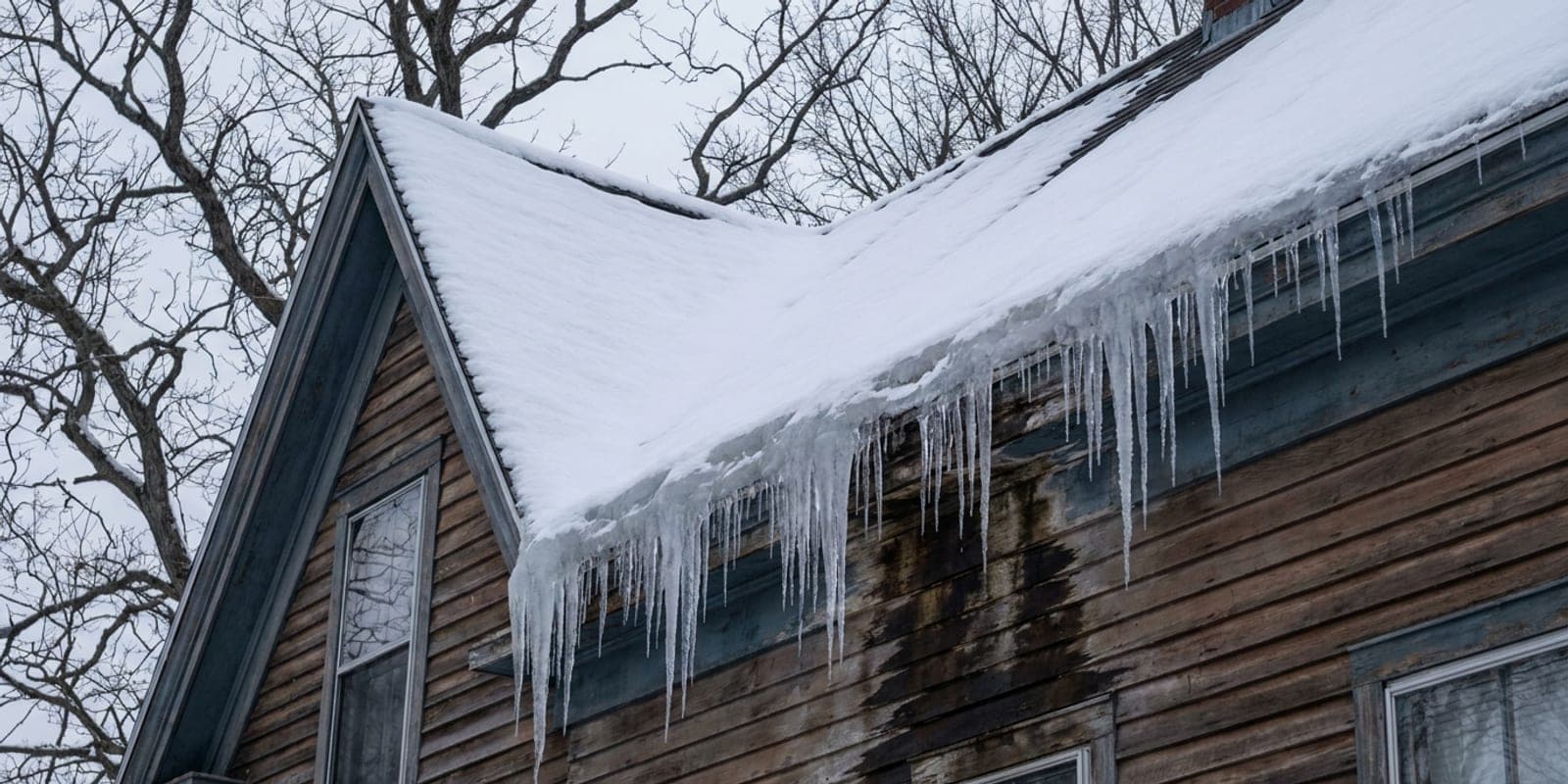
An ice dam is an attic problem that shows up on the roof. The water stain on the bedroom ceiling and the wall of icicles over the front door are symptoms. The cause is heat leaking out of the living space and into the attic, and no amount of work on the shingles changes that.
How an ice dam forms
Start with a roof that has eight inches of snow on it. The snow is a blanket. Under it, the roof deck is warmed from below by whatever heat is escaping through the attic floor: gaps around the chimney chase, the attic hatch, recessed lights, the top plates of interior walls, and bath fan ducts that were never sealed where they pass through.
That warmth melts the underside of the snowpack. The meltwater runs down the roof, following the slope, until it reaches the overhang. The overhang is past the exterior wall, so there is no heated space under it. It sits at outdoor temperature. The water freezes there.
Over a few days of this, the frozen edge grows into a ridge. Water that melts higher up now has nowhere to drain. It pools behind the ridge and sits against shingles that were designed to shed water running down, not to hold water standing still. Shingles overlap by a couple of inches. Standing water will find the overlap, run up under the course above, and come through the roof deck and into the ceiling below.
That is the whole mechanism. Heat, snow, a cold edge. If you remember one thing, remember that the ice dam is not caused by the gutter, and a new roof laid over an unchanged attic will form the same dam next February.
Why older New England houses are worse
Three housing types account for most of the ice dam calls in this region.
Capes and cape-style postwar houses. A one and a half story house has knee walls, the short vertical walls under the slope on the upper floor. Behind a knee wall is a cold, awkward attic space that often has fiberglass batts pushed in loosely. The sloped section of ceiling has only the depth of the rafter for insulation, and that depth was often left half empty so there would be an air channel that never got built. Ice dams on a Cape tend to run the whole length of the eave.
Center chimney colonials. A big masonry chimney is a heat source running straight through the attic. Where the framing meets the masonry there is usually a gap, and warm air moves through it freely. Ice dams here often form in a patch on either side of the chimney rather than along the whole eave.
Houses with converted attics and cathedral ceilings. Anywhere a ceiling follows the rafters, there is very little room for insulation and ventilation to coexist. If someone finished an attic bedroom in 1985, the roof above it is the likeliest place for a dam on the whole house.
A Providence triple-decker behaves differently. Its main roof is a low pitch with a lot of surface area, and the rear ell is nearly flat. Ice and snow on the ell cause leaks, but the cause is usually drainage and ponding, not the freeze cycle at the eave. It is worth knowing which problem you have before you call anyone.
What fixes it, in order of importance
One: stop the air leaks into the attic. Air sealing comes before insulation. The warm air that rises through a gap carries far more heat into the attic than the same area of uninsulated ceiling would conduct. Seal the attic hatch, the wire and pipe penetrations, the gaps around chimney framing with the right fire-rated material, and the tops of interior walls. This is cheap work and it is the part most people skip.
Two: add insulation to the attic floor. The recommended range for this climate zone runs from roughly R-49 to R-60. Many older houses in the region have R-11 to R-19, and plenty have less. Blown-in cellulose or fiberglass over a sealed attic floor is the usual approach. In an energy assessment, attic insulation is routinely the best return per dollar on an older house.
Three: ventilate the roof edge to ridge. The goal is a continuous path of outside air moving along the underside of the roof deck, entering at the soffits and leaving at the ridge. That keeps the deck cold, which is the opposite of what the melting process needs. Baffles at each rafter bay hold the insulation back so the air path stays open. Soffit vents that have been painted shut, or covered by blown-in insulation, are very common.
Four: add ice and water shield at the eaves. This is a self-adhering waterproof membrane laid under the shingles. It does not prevent the dam. What it does is stop the water that backs up from reaching the deck. On a roof replacement it is worth running it from the eave up past the exterior wall line, and many installers go further in the valleys and along low-slope sections. On a cold-roof problem that has been fixed at the attic, it is cheap insurance.
The order matters. If you do the fourth item and skip the first three, you have a roof that leaks less but still dams, and you will be back looking at the gutter in March.
Removing an ice dam that is already there
Do not chip it. Hammers, shovels, and ice picks take the granules off the shingles and can crack them, especially at temperatures well below freezing. People fall off ladders doing this every winter, and it is not a job for a homeowner standing on a slick roof.
The standard professional method is low-pressure steam. It melts the dam without hammering anything. It is slower and more expensive than chipping and it is the right way to do it. Expect to pay for a minimum service call, and expect the cost to rise with the length of the eave and the height of the building.
For a leak that is already coming through, the immediate priority is the interior. Puncture the bulge in the ceiling to let the water drain into a bucket instead of letting it pool until the drywall collapses, and move whatever is below it.
Two things that can help in the short term, without fixing anything:
A roof rake from the ground takes snow off the lowest four feet or so of the roof. Without snow there is nothing to melt and refreeze. It is cheap, it works, and you should use a rake with a long handle rather than climbing.
Heat cables zig-zagged along the eave keep a channel open for meltwater. They cost money to run, and they treat the symptom. On a house with a chronic problem they are a patch, not a repair.
Where gutters come into it
Gutters get blamed because the ice is visible there. The gutter is simply the first place the dam forms, since that is where the roof ends. A full gutter makes things slightly worse. Clean gutters will not prevent the dam. And no gutter guard prevents ice damming either, which is worth knowing before anyone sells you one on that basis. For more on that, see do gutter guards actually work under New England leaf load.
If your gutters are pulling away from the fascia in winter, that is usually the weight of the ice, and the fascia behind may be rotted as well. Sort the attic first. Then replace the gutters once, rather than twice.
What it costs
Costs are estimates for this market, not quotes.
Attic air sealing and insulation upgrades, steam removal, and a full roof replacement all sit in very different price bands, which is why the diagnosis matters. A full tear-off and replacement with architectural asphalt on an 1,800 square foot footprint runs roughly 11,000 to 24,000 dollars in Massachusetts before adjusting for your town and your house, and the price rises on older houses with board sheathing. Ice and water shield adds about 1.15 dollars per square foot in this site's calculator. The attic work is usually a fraction of the roof cost, and it is the part that decides whether the roof you buy keeps the water out.
You can run your own numbers with the roofing cost calculator, which includes an ice and water shield option and an age-of-house adjustment.
If you only do one thing
Go into the attic with a flashlight on a cold day with snow on the roof. Look for bare, melted patches on the roof edge from the street, and look from inside for daylight, frost, or flattened insulation near the chimney and hatch. If you can see where the air is moving, you have already done the most useful part of the diagnosis.
If the roof also needs replacement, read the roofing guide for New England housing stock, and use the state pages to find what applies where you live. If you want quotes from contractors who work in your town, the free estimate form is the next step. It carries no obligation.